Dill
Serving: 0.50 cup (4.45g, 2 cal)
Key Nutrients
About Dill
Health benefits
Dill (Anethum graveolens) contains two distinct classes of bioactive compounds: monoterpenes (carvone, limonene, anethofuran) and flavonoids (kaempferol, vicenin).
Phase II enzyme activation and carcinogen neutralization
Dill’s monoterpenes activate the enzyme glutathione S-transferase (GST), which conjugates glutathione to oxidized molecules and facilitates their excretion. This activity allows dill to help neutralize specific carcinogens, including benzopyrenes found in cigarette smoke, charcoal grill emissions and incinerator exhaust. Parsley shares a similar chemoprotective mechanism through the same enzyme family.
Bacteriostatic properties
The volatile oil fraction of dill inhibits bacterial overgrowth in laboratory studies. The primary antimicrobial compounds are carvone and limonene. Garlic exhibits a parallel bacteriostatic effect through different sulfur-containing compounds.
Calcium and bone mineral support
Half a cup of fresh dill weed provides 63.67 mg of calcium (6.4% DV). Calcium is the primary structural mineral in bone tissue, and adequate intake helps offset the accelerated bone resorption that follows menopause. Dill also supplies manganese (0.06 mg, 3% DV), iron (0.69 mg, 3.8% DV) and magnesium (10.75 mg, 2.7% DV).
Description
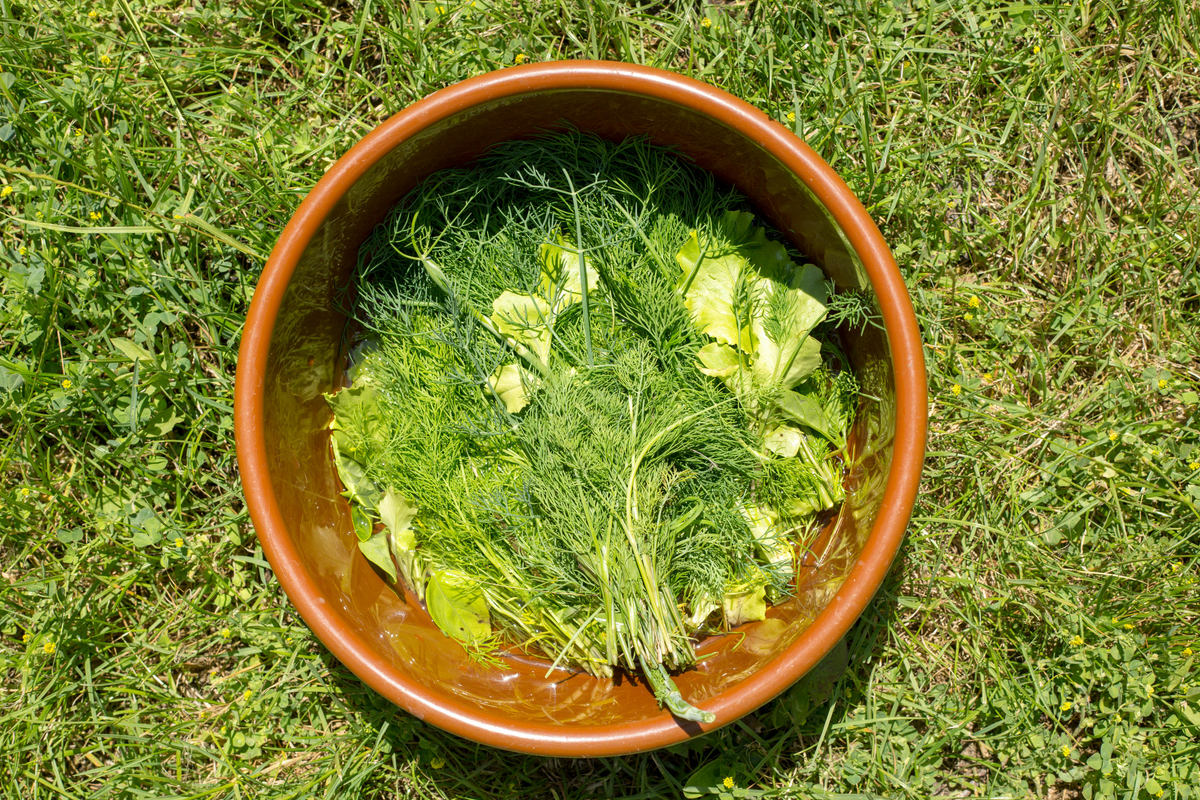
Both leaves and seeds of dill serve as seasonings. The leaves are wispy, fernlike and mildly sweet. The dried seeds are light brown, oval, with one flat side and one convex ridged side; their flavor is aromatic and citrusy with a slight bitterness reminiscent of caraway.
The name derives from the Old Norse dilla, meaning “to lull,” reflecting dill’s traditional use as a carminative and mild sedative.
Dill belongs to the Umbelliferae family alongside parsley, cumin and bay.
History
Native to southern Russia, western Africa and the Mediterranean, dill appears in both biblical texts and ancient Egyptian writings. Hippocrates included dill in a mouth-cleansing preparation. Ancient soldiers applied burnt dill seeds to wounds.
Charlemagne kept dill on his banquet tables so guests who had overindulged could chew the seeds for digestive relief. Today dill is prominent in the cuisines of Scandinavia, Central Europe, North Africa and the Russian Federation.
How to select and store
Fresh dillweed retains more of its volatile oils than dried. Look for feathery, green leaves; mild wilting is acceptable since dill droops quickly after picking.
Local spice shops and ethnic markets typically stock fresher dried herbs than supermarkets. Organically grown dill seeds avoid potential irradiation.
Refrigerate fresh dill wrapped in a damp paper towel or with stems in water; it keeps about two days. For longer storage, freeze chopped dill in airtight containers or in ice cube trays covered with water or stock.
Dried seeds keep for roughly six months in a sealed glass container stored in a cool, dark, dry place.
How to enjoy
A few quick serving ideas
- Combine dill weed with plain yogurt and chopped cucumber for a cooling dip.
- Pair dill with salmon or trout; the herb’s anise-like notes complement fatty fish.
- Garnish sandwiches with fresh dill weed.
- Set a small dish of dill seeds on the dinner table as a post-meal digestive aid.
- Add dill to egg salad.
- Toss chopped potatoes and green beans with plain yogurt, then season with both dill seeds and chopped fresh dill.
Nutritional profile
Half a cup of fresh dill provides 3.78 mg of vitamin C (5% DV), 63.67 mg of calcium (6.4% DV), 0.89 g of fiber (3.6% DV), 0.06 mg of manganese (3% DV), 0.69 mg of iron (3.8% DV) and 10.75 mg of magnesium (2.7% DV). Dill is also a source of pro-vitamin A carotenoids.
The herb’s bioactive profile centers on two compound classes: the monoterpenes carvone, limonene and anethofuran; and the flavonoids kaempferol and vicenin.
Individual concerns
Dill is not a commonly allergenic food and is not known to contain measurable amounts of oxalates or purines.
A santoku knife like the Zwilling Pro 7" Santoku Knife excels at fine mincing of herbs and aromatics — the hollow edge keeps things from sticking to the blade.
Recipes with Dill
Full Nutrient Profile
References
- Ensminger AH, Esminger M. K. J. e. al. Food for Health: A Nutrition Encyclopedia. Clovis, California: Pegus Press; 1986. 1986. PMID:15210.
- Fortin, Francois, Editorial Director. The Visual Foods Encyclopedia. Macmillan, New York. 1996.
- Grieve M. A Modern Herbal. Dover Publications, New York. 1971.
- Singh G, Kapoor IP, Pandey SK et al. Studies on essential oils: part 10; antibacterial activity of volatile oils of some spices. Phytother Res 2002 Nov;16(7):680-2. 2002. https://doi.org/10.1002/ptr.951
- Wood, Rebecca. The Whole Foods Encyclopedia. New York, NY: Prentice-Hall Press; 1988. 1988. PMID:15220. https://doi.org/10.1002/food.19770210206
- Zheng GQ, Kenney PM, Lam LK. Anethofuran, carvone, and limonene: potential cancer chemopreventive agents from dill weed oil and caraway oil. Planta Med 1992 Aug;58(4):338-41. 1992. PMID:12200. https://doi.org/10.1021/jf60208a022