Bok choy
Serving: 1.00 cup (170g, 20 cal)
Key Nutrients
| Nutrient | Amount | DV% | Rating |
|---|---|---|---|
| vitamin K | 57.8 mcg | 64% | Excellent |
| vitamin C | 44.2 mg | 59% | Excellent |
| vitamin A | 361.16 mcg RAE | 40% | Excellent |
| folate | 69.7 mcg | 17% | Excellent |
| vitamin B6 | 0.28 mg | 16% | Excellent |
| calcium | 105.23 mg | 8% | Excellent |
| potassium | 387.6 mg | 8% | Excellent |
| manganese | 0.33 mg | 14% | Excellent |
| iron | 0.75 mg | 4% | Very Good |
| vitamin B2 | 0.11 mg | 8% | Very Good |
| phosphorus | 49.3 mg | 7% | Very Good |
| fiber | 1.65 g | 6% | Very Good |
| protein | 1.73 g | 3% | Very Good |
| choline | 20.57 mg | 5% | Good |
| vitamin B3 | 0.73 mg | 5% | Good |
| magnesium | 18.7 mg | 4% | Good |
| vitamin B1 | 0.05 mg | 4% | Good |
| copper | 0.05 mg | 6% | Good |
| omega-3 fats | 0.07 g | 3% | Good |
| zinc | 0.47 mg | 4% | Good |
| pantothenic acid | 0.13 mg | 3% | Good |
vitamin K
Excellentvitamin C
Excellentvitamin A
Excellentfolate
Excellentvitamin B6
Excellentcalcium
Excellentpotassium
Excellentmanganese
Excellentiron
Very Goodvitamin B2
Very Goodphosphorus
Very Goodfiber
Very Goodprotein
Very Goodcholine
Goodvitamin B3
Goodmagnesium
Goodvitamin B1
Goodcopper
Goodomega-3 fats
Goodzinc
Goodpantothenic acid
GoodAbout Bok choy
What’s new and beneficial about bok choy
- Baby bok choy has become more widely available to U.S. consumers. Among 17 cruciferous vegetables analyzed in one study, Baby Shanghai bok choy was unique in containing high amounts of both “Principle 1” phenols (primarily kaempferol- and quercetin-related flavonoids) and “Principle 2” phenols (non-flavonoid compounds including malic acid and hydroxycinnamic acid).
- Bok choy contains over 70 identified antioxidant phytonutrients. This antioxidant density partly explains ongoing research into bok choy and cancer prevention, since reducing oxidative stress has been linked to decreased cancer risk in epidemiological studies.
- Bok choy contains glucosinolates (sulfur-containing compounds associated with reduced cancer risk). In a study comparing early-growth-stage cruciferous vegetables, bok choy shoots had greater total glucosinolate concentrations than shoots of broccoli, cabbage, cauliflower, and kale. Only mustard green shoots scored higher.
- With 4,333 mcg of beta-carotene per cooked cup, bok choy ranks among the top cruciferous vegetables for vitamin A content, ahead of cauliflower, cabbage, Brussels sprouts, and broccoli. It also provides measurable lutein (64.6 mcg per cup).
Intake recommendations
A minimum of 3/4 cup of cruciferous vegetables per day (about 5 cups per week) is a reasonable target; 1-1/2 cups daily is more optimal. Bok choy is particularly practical among cruciferous vegetables because of its quick cooking time, tender texture, mild sweetness, and recipe versatility.
Bok Choy, cooked
1.00 cup
(170.00 grams)
Calories: 20
GI: very low
NutrientDRI/DV
vitamin K64%
vitamin C59%
vitamin A40%
folate17%
calcium16%
vitamin B616%
potassium13%
iron10%
manganese10%
vitamin B28%
phosphorus7%
fiber6%
protein5%
choline5%
vitamin B35%
magnesium4%
vitamin B14%
zinc3%
omega-3 fats3%
pantothenic acid3%
copper3%
- Health Benefits
- Description
- History
- How to Select and Store
- Tips for Preparing and Cooking
- How to Enjoy
- Individual Concerns
- Nutritional Profile
- References
Health benefits
Antioxidant capacity
One cup (170g) of cooked bok choy provides 59% DV of vitamin C, 40% DV of vitamin A (as carotenoids), and 10% DV of manganese. Beyond these conventional antioxidants, bok choy contains flavonoids (quercetin, kaempferol, isorhamnetin) and phenolic acids (including hydroxycinnamic acids). These compounds neutralize reactive oxygen species through different mechanisms: direct radical scavenging, metal chelation, and upregulation of endogenous antioxidant enzymes. The diversity matters, because no single antioxidant covers all pathways. At least one study found higher total phenol content in organically grown bok choy compared to conventionally grown, though phenol levels vary with cultivar, soil, and season.
Purple bok choy cultivars (sometimes sold as “Purple Choy” or “Pak Choi Rubi”) also contain anthocyanidins, the red-purple flavonoid pigments with documented antioxidant and anti-inflammatory activity.
Anti-inflammatory compounds
Many of the antioxidant phytonutrients in bok choy also modulate inflammatory signaling. Two additional anti-inflammatory nutrients deserve mention. First, one cup of cooked bok choy provides about 70 mg of alpha-linolenic acid (ALA), a plant omega-3 fatty acid. On a calorie-for-calorie basis, this concentration is roughly half that of walnuts.
Second, bok choy is an excellent source of vitamin K (57.8 mcg per cup, 64% DV). Beyond its established functions in bone mineralization and coagulation, vitamin K regulates inflammatory responses, particularly within the cardiovascular system, by modulating the activity of inflammatory cytokines.
Glucosinolates and cancer research
Human studies on cruciferous vegetable consumption (one or more daily servings) have associated frequent intake with decreased risk of certain cancers. This protection correlates in part with glucosinolate content. Glucosinolates are sulfur-containing precursors that hydrolyze into isothiocyanates during chewing and digestion. No study has isolated bok choy specifically; its mature-plant glucosinolate content is lower than that of Brussels sprouts or mustard greens, though its shoot-stage concentrations are comparatively high.
Description
All cruciferous vegetables provide integrated nourishment across a wide variety of nutritional categories and provide broad support across a wide variety of body systems as well. For more on cruciferous vegetables see:
- Eating Healthy with Cruciferous Vegetables
- Feeling Great with Cruciferous Vegetables
Bok choy is a cruciferous vegetable that can go by many different names. Some of these different names for bok choy include white cabbage, mustard cabbage, celery cabbage, Chinese white cabbage, Chinese mustard, and white celery mustard. The English spelling of bok choy can also take several different forms. You might see the first word in this food name being spelled as “buk,” “pok,” or “pak.” You might see the second word being spelled as “choi.” And sometimes you might find these two words being combined into a single word like “pakchoi.” Helping to make sense of many of the names above is the literal translation of “bok choy” in Chinese; the words “bok choy” come from “bai cai” where “bai” means “white” and “cai” means “cabbage.”
Many of the cruciferous vegetables commonly eaten in the U.S. are known for the “heads” that they form in their more mature plant stages. Cauliflower, broccoli, cabbage, and Brussels sprouts can all fall into this category of “head-forming” cruciferous vegetables. By contrast, bok choy is a non-head-forming cruciferous vegetable, and in fact is sometimes referred to as “non-heading Chinese cabbage.” While the leaves of the bok choy plant can cluster together in a noticeable way, they do not form a head and at times can be only loosely clustered together.
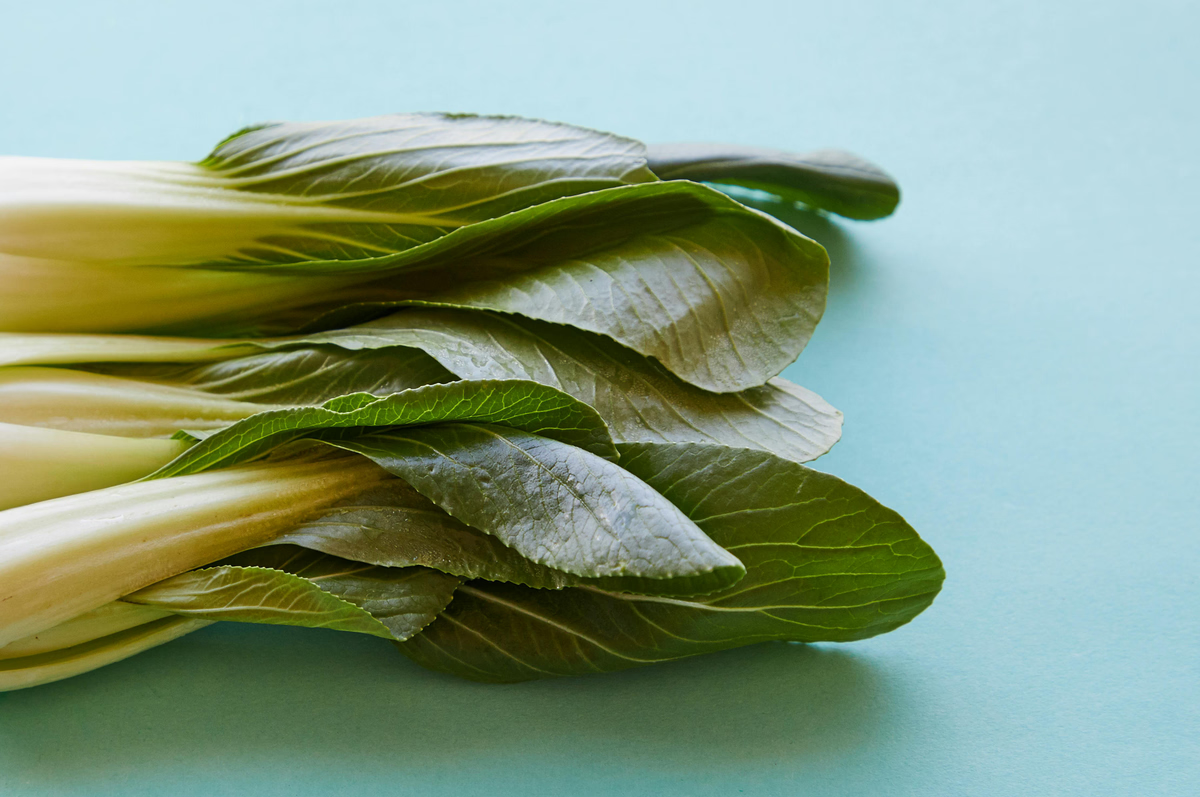
In many U.S. grocery stores, you are most likely to find bok choy that features green spoon-shaped leaves and slightly flattened white stalks. Varieties of bok choy that fall into this category include Mibuna Early, Canton, and Ching Chang. However, there are numerous varieties of bok choy and they can vary in their stalk color. While white and beige stalks are widely enjoyed, so are green stalks with many varying shades, including Shanghai Green and Green Boy. Also becoming more available in U.S. groceries are varieties of bok choy with purple leaves. Purple varieties of bok choy include Rubi and Purple Hybrid.
Just as you can find more than one recognizable form of bok choy, you can also find more than one scientific name for this cruciferous vegetable. The most common name is Brassica rapa L. subsp. chinensis. But you may also find bok choy being scientifically referred to as Brassica chinensis (where “chinensis” is used as a species name rather than a subspecies name). Also, you may occasionally see bok choy being identified as Brassica campestris L. subsp. chinensis.
History
Bok choy has been enjoyed in China and other parts of Asia for over 1,500 years. And bok choy is by no means a total newcomer to North America either, having been cultivated on the continent for over 100 years. About 95 million pounds of Asian vegetables,the produce trading category that includes bok choy,are brought into the U.S. each year (primarily from Mexico). However, another 35 million pounds are produced in the U.S. The state of California dominates this domestic production, with smaller amounts being produced in Arizona and Texas. Some marketplace statistics on bok choy combine production of this vegetable together with overall cabbage production. If this approach is used, the numbers go up dramatically, since more than 2 billion pounds of cabbage are produced in the U.S. each year.
How to select and store
Look for bok choy with firm, bright green colored leaves (or purple, if you are purchasing a purple variety) and moist hardy stems. Bok choy should be displayed in a cool environment since warm temperatures will cause it to wilt and will negatively affect its flavor. The leaves should look fresh, be unwilted, and be free from signs of browning, yellowing, and small holes. Bok choy is available throughout the year, although it is more widely available, and at its peak, from the middle of winter through the beginning of spring.
At WHF, we encourage the purchase of certified organically grown foods, and bok choy is no exception. Repeated research studies show that your likelihood of exposure to contaminants such as pesticides and heavy metals can be greatly reduced through the purchase of certified organic bok choy. In many cases, you may be able to find a local organic grower who sells bok choy but has not applied for formal organic certification either through the U.S. Department of Agriculture (USDA) or through a state agency. (Examples of states offering state-certified organic foods include California, New York, Oregon, and Vermont and Washington.) However, if you are shopping in a large supermarket, your most reliable source of organically grown bok choy is very likely to be bok choy that displays the USDA organic logo.
To store, place bok choy in a plastic storage bag, removing as much of the air from the bag as possible, and place it in the crisper of your refrigerator..Bok choy will keep for about 1 week if properly stored.
Here is some background on why we recommend refrigerating bok choy. Whenever food is stored, four basic factors affect its nutrient composition: exposure to air, exposure to light, exposure to heat, and length of time in storage. Vitamin C, vitamin B6, and carotenoids are good examples of nutrients highly susceptible to heat, and for this reason, their loss from food is very likely to be slowed down through refrigeration.
Tips for preparing and cooking
Preparation
Unlike some of the other cruciferous vegetables, you can consume virtually all parts of bok choy without much trimming or worrying about problematic textures or cooking times.
Chop leaf portion into 1/8” slices and the stems into 1/2” lengths for quick and even cooking.
Cooking for nutrient retention
From all of the cooking methods we tried when cooking bok choy, our favorite is Healthy Sauté. We think that it provides the greatest flavor.
Healthy Sauté,similar to Quick Steaming and Quick Boiling, our other recommended cooking methods,follows three basic cooking guidelines that are generally associated in food science research with improved nutrient retention. These three guidelines are: (1) minimal necessary heat exposure; (2) minimal necessary cooking duration; (3) minimal necessary food surface contact with cooking liquid.
To Healthy Sauté bok choy, heat 5 TBS of vegetable or chicken broth, or water, in a stainless steel skillet. Once bubbles begin to form add bok choy stems on the bottom of the pan and the leaves on top, cover, and Healthy Sautéfor 3 minutes. (See our recipe for details on how to prepare this dish.)
How to enjoy
Serving ideas
- Healthy Sauté bok choy with snow peas and mushrooms.
- Add a few drops of tamari soy sauce to bok choy recipe.
- Combine Healthy Sautéed bok choy with tofu or chicken for a complete meal.
Recipes that feature bok choy
- 15-Minute Steamed Halibut with Bok Choy
- 15-Minute Healthy Sautéed Chicken & Bok Choy
- 4-Minute Healthy Sautéed Bok Choy
Individual concerns
Bok choy and goitrogens
You may sometimes hear bok choy being described as a food that contains “goitrogens,” or as a food that is “goitrogenic.” For helpful information in this area,including our WHF Recommendations,please see our article What is meant by the term “goitrogen” and what is the connection between goitrogens, food, and health?.
Nutritional profile
One cup (170g) of cooked bok choy provides 64% DV vitamin K, 59% DV vitamin C, 40% DV vitamin A (as carotenoids), 17% DV folate, 16% DV vitamin B6, 16% DV calcium, 13% DV potassium, 10% DV iron, and 10% DV manganese. It also supplies riboflavin, phosphorus, fiber, protein, choline, magnesium, niacin, thiamin, copper, omega-3 fatty acids (as ALA), zinc, and pantothenic acid. Phytonutrients include the flavonoids quercetin, kaempferol, and isorhamnetin, plus phenolic acids such as hydroxycinnamic and malic acid.
A quality salad spinner like the OXO Good Grips Salad Spinner removes excess water quickly, which helps leafy greens cook evenly and keeps salads crisp.
Recipes with Bok choy
Full Nutrient Profile
Related Articles
- Are bitter vegetables better for you?
- Can Preparation Methods Impact the Benefits of Cruciferous Vegetables?
- Eating Healthy with Cruciferous Vegetables
- Eating in Season: Your Need-to-Know Basics
- Feeling Great with Cruciferous Vegetables
- I've heard a lot about eating a "colorful diet." Should I pick fruits and vegetables based on color to help me get more benefits from these foods?
- Veggie Advisor: Why are Vegetables So Indispensable for Healthy Eating?
- Which foods contain chlorophyll, and in what amount?
References
- Bhandari SR, Jo JS, and Lee JG. Comparison of Glucosinolate Profiles in Different Tissues of Nine Brassica Crops. Molecules. 2015 Aug 31;20(9):15827-41. https://doi.org/10.3390/molecules200915827
- Eriksen JN, Luu AY, Dragsted LO, et al. In vitro liberation of carotenoids from spinach and Asia salads after different domestic kitchen procedures. Food Chemistry, Volume 203, 15 July 2016, pages 23-27. https://doi.org/10.1016/j.foodchem.2016.02.033
- Harbayum B, Hubbermann EM, Zhu Z et al. Free and bound phenolic compounds in leaves of pak choi (Brassica campestris L. ssp. chinensis var. communis) and Chinese leaf mustard (Brassica juncea Coss). Food Chemistry, Volume 110, Issue 4, 15 October 2008, Pages 838-846. https://doi.org/10.1016/j.foodchem.2008.02.069
- Heimler D, Vignolini P, Dini MG et al. Antiradical activity and polyphenol composition of local Brassicaceae edible varieties. Food Chemistry, Volume 99, Issue 3, 2006, Pages 464-469. https://doi.org/10.1016/j.foodchem.2005.07.057
- Kameya H, Watanabe J, Takano-Ishikawa Y, et al. Comparison of scavenging capacities of vegetables by ORAC and EPR. Food Chemistry, Volume 145, 15 February 2014, pages 866-873. https://doi.org/10.1016/j.foodchem.2013.09.015
- Kim JK, Chu SM, Kim SJ, et al. Variation of glucosinolates in vegetable crops of Brassica rapa L. ssp. pekinensis. Food Chemistry, Volume 119, Issue 1, 1 March 2010, pages 423-428. https://doi.org/10.1016/j.foodchem.2009.08.051
- Lee WY Jr, Emmy Hainida KI, Abbe Maleyki MJ, et al. Antioxidant capacity and phenolic content of selected commercially available cruciferous vegetables. Malays J Nutr. 2007 Mar;13(1):71-80. Epub 2007 Mar 15.
- Lin LZ and Harnly JM. Phenolic component profiles of mustard greens, yu choy, and 15 other brassica vegetables. J Agric Food Chem. 2010 Jun 9;58(11):6850-7. doi: 10.1021/jf1004786. https://doi.org/10.1021/jf1004786
- Lu S. Effect of packaging on shelf-life of minimally processed Bok Choy (Brassica chinensis L.). LWT - Food Science and Technology, Volume 40, Issue 3, April 2007, pages 460-464. https://doi.org/10.1016/j.lwt.2005.12.004
- Reif C, Arrigoni E, Berger F, et al. Lutein and β-carotene content of green leafy Brassica species grown under different conditions. LWT - Food Science and Technology, Volume 53, Issue 1, September 2013, Pages 378-381. https://doi.org/10.1016/j.lwt.2013.02.026
- Reiss R, Johonston J, Tucker K, et al. Estimation of cancer risks and benefits associated with a potential increased consumption of fruits and vegetables. Food and Chemical Toxicology, Volume 50, Issue 12, December 2012, Pages 4421-4427. https://doi.org/10.1016/j.fct.2012.08.055
- Samec D, Piljac-Zegarac J, Bogovic M, et al. Antioxidant potency of white (Brassica oleracea L. var. capitata) and Chinese (Brassica rapa L. var. pekinensis (Lour.)) cabbage: The influence of development stage, cultivar choice and seed selection. Scientia Horticulturae, Volume 128, Issue 2, 18 March 2011, Pages 78-83. https://doi.org/10.1016/j.scienta.2011.01.009
- Talavera-Bianchi M, Chambers E 4th, Carey EE, et al. Effect of organic production and fertilizer variables on the sensory properties of pac choi (Brassica rapa var. Mei Qing Choi) and tomato (Solanum lycopersicum var. Bush Celebrity). J Sci Food Agric. 2010 Apr 30;90(6):981-8. https://doi.org/10.1002/jsfa.3907
- Zamora-Ros R, Rothwell JA, Scalbert A, et al.Dietary intakes and food sources of phenolic acids in the European Prospective Investigation into Cancer and Nutrition (EPIC) study.Br J Nutr. 2013 Oct;110(8):1500-11. doi: 10.1017/S0007114513000688. Epub 2013 Mar 14. https://doi.org/10.1017/S0007114513000688
- Zhang Y, Chen G, Dong T, Pan Y, et al. Anthocyanin accumulation and transcriptional regulation of anthocyanin biosynthesis in purple bok choy (Brassica rapa var. chinensis). https://doi.org/10.1021/jf503453e
- J Agric Food Chem. 2014 Dec 24;62(51):12366-76.
- Zhao X, Nechols JR, Williams KA, et al. (2009), Comparison of phenolic acids in organically and conventionally grown pac choi (Brassica rapa L. chinensis). J. Sci. Food Agric., 89: 940,946.