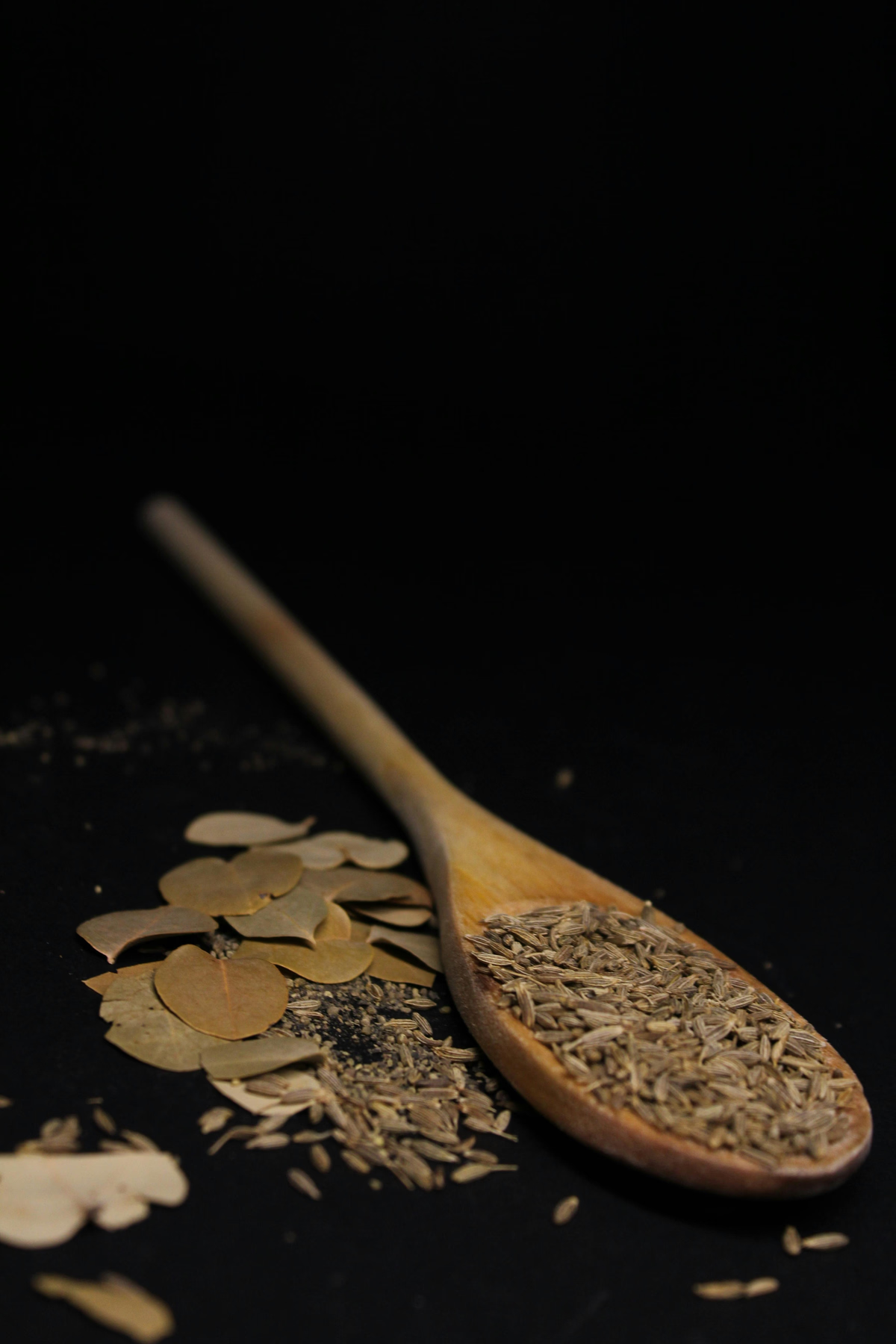
Cumin seeds
Serving: 2.00 tsp (4.2g, 16 cal)
Key Nutrients
| Nutrient | Amount | DV% | Rating |
|---|---|---|---|
| iron | 2.79 mg | 16% | Excellent |
| manganese | 0.14 mg | 6% | Very Good |
| copper | 0.04 mg | 4% | Good |
| calcium | 39.1 mg | 4% | Good |
| magnesium | 15.37 mg | 4% | Good |
| phosphorus | 20.96 mg | 3% | Good |
| vitamin B1 | 0.03 mg | 3% | Good |
iron
Excellentmanganese
Very Goodcopper
Goodcalcium
Goodmagnesium
Goodphosphorus
Goodvitamin B1
GoodAbout Cumin seeds
Health benefits
Cumin (Cuminum cyminum) is a staple across Indian, Middle Eastern and Mexican cuisines, and its biochemistry offers reasons beyond flavor for that culinary staying power.
Iron for energy and immune function
Two teaspoons (4.2g) of cumin seeds provide 2.79 mg of iron, covering 16% of the Daily Value. Iron is a structural component of hemoglobin, which transports oxygen from the lungs to every cell, and of cytochrome enzymes in the mitochondrial electron transport chain. Menstruating women lose iron monthly, making iron-dense spices like cumin a useful dietary addition. Growing children, adolescents, and pregnant or lactating women also have elevated iron requirements.
Digestive enzyme stimulation
Traditional medicine systems have long used cumin for digestive complaints. Animal research indicates cumin can stimulate secretion of pancreatic lipase, amylase and protease, enzymes required for fat, starch and protein digestion respectively.
Potential anti-carcinogenic activity
In animal studies, cumin extract reduced the incidence of stomach and liver tumors. The mechanism appears to involve upregulation of hepatic glutathione S-transferase and quinone reductase, both phase II detoxification enzymes. Cumin’s phenolic compounds, including cuminaldehyde, also scavenge reactive oxygen species in vitro. Human clinical data remain limited.
Description
The seed is small, oblong, longitudinally ridged and yellow-brown. Its flavor is penetrating and peppery with slight citrus overtones. Cumin seeds resemble caraway seeds; both belong to the Umbelliferae family, alongside parsley and dill.
Cumin is sold as whole seeds or ground powder.
History
Cumin is native to Egypt and has been cultivated across the Middle East, India, China and Mediterranean countries for millennia. It appears in the Bible as both a soup and bread seasoning and as a currency for paying tithes. In ancient Egypt, cumin was used in mummification.
Ancient Greek and Roman cooks valued cumin as a peppery substitute for black pepper, which was expensive and scarce. Its cosmetic application for inducing a pallid complexion was popular among students attempting to appear as though they had studied through the night.
In ancient Rome, cumin became a symbol of avarice. The emperors Marcus Aurelius and Antoninus Pius received cumin-referencing nicknames for their frugality.
During the European Middle Ages, cumin was among the most widely used spices. It also became a symbol of love and fidelity: people carried cumin to weddings, and soldiers departed for war with cumin bread baked by their wives. In certain Arabic traditions, a paste of ground cumin, pepper and honey is considered an aphrodisiac.
Cumin’s popularity in Europe waned after the Middle Ages but has revived in recent decades.
How to select and store
Buy whole seeds over pre-ground powder when possible; the intact seed retains volatile oils (cuminaldehyde, cymene, terpinene) longer. Grinding with a mortar and pestle takes seconds.
Local spice shops and ethnic markets often carry fresher stock than supermarkets. Organically grown cumin avoids potential irradiation during processing.
Store seeds and powder in a tightly sealed glass container in a cool, dark, dry location. Ground cumin keeps for roughly six months; whole seeds remain aromatic for about a year.
Tips for preparing and cooking
Tips for cooking with cumin
Lightly dry-roasting whole seeds in a skillet for 1-2 minutes before use releases volatile oils and intensifies both aroma and flavor.
How to enjoy
A few quick serving ideas
- The combination of cumin, black pepper and honey is a traditional Middle Eastern seasoning blend that works well on vegetables, chicken and fish.
- Steep seeds in boiling water for 8-10 minutes to make cumin tea.
- Cumin pairs naturally with legumes (lentils, garbanzo beans, black beans) because its warm, earthy notes complement their starchy depth.
- Toss cumin seeds, dried apricots and almonds into plain brown rice for a simple pilaf.
- Season sauteed vegetables with cumin for a North African character.
Nutritional profile
Two teaspoons of cumin seeds provide 2.79 mg of iron (16% DV), 0.14 mg of manganese (6% DV), 39.1 mg of calcium (4% DV), 15.37 mg of magnesium (4% DV), 20.96 mg of phosphorus (3% DV) and 0.03 mg of vitamin B1 (3% DV).
Individual concerns
Cumin seeds are not a commonly allergenic food and are not known to contain measurable amounts of oxalates or purines.
Freshly ground spices release far more aroma than pre-ground. A heavy granite ChefSofi Granite Mortar and Pestle crushes whole spices quickly and lasts forever.
Recipes with Cumin seeds
Full Nutrient Profile
References
- Ensminger AH, Esminger M. K. J. e. al. Food for Health: A Nutrition Encyclopedia. Clovis, California: Pegus Press; 1986. 1986. PMID:15210.
- Fortin, Francois, Editorial Director. The Visual Foods Encyclopedia. Macmillan, New York. 1996.
- Grieve M. A Modern Herbal. Dover Publications, New York. 1971.
- Martinez-Tome M, Jimenez AM, Ruggieri S, et al. Antioxidant properties of Mediterranean spices compared with common food additives. J Food Prot 2001 Sep;64(9):1412-9. 2001. PMID:12440. https://doi.org/10.1016/0024-3205(76)90117-x
- Wood, Rebecca. The Whole Foods Encyclopedia. New York, NY: Prentice-Hall Press; 1988. 1988. PMID:15220. https://doi.org/10.1002/food.19770210206