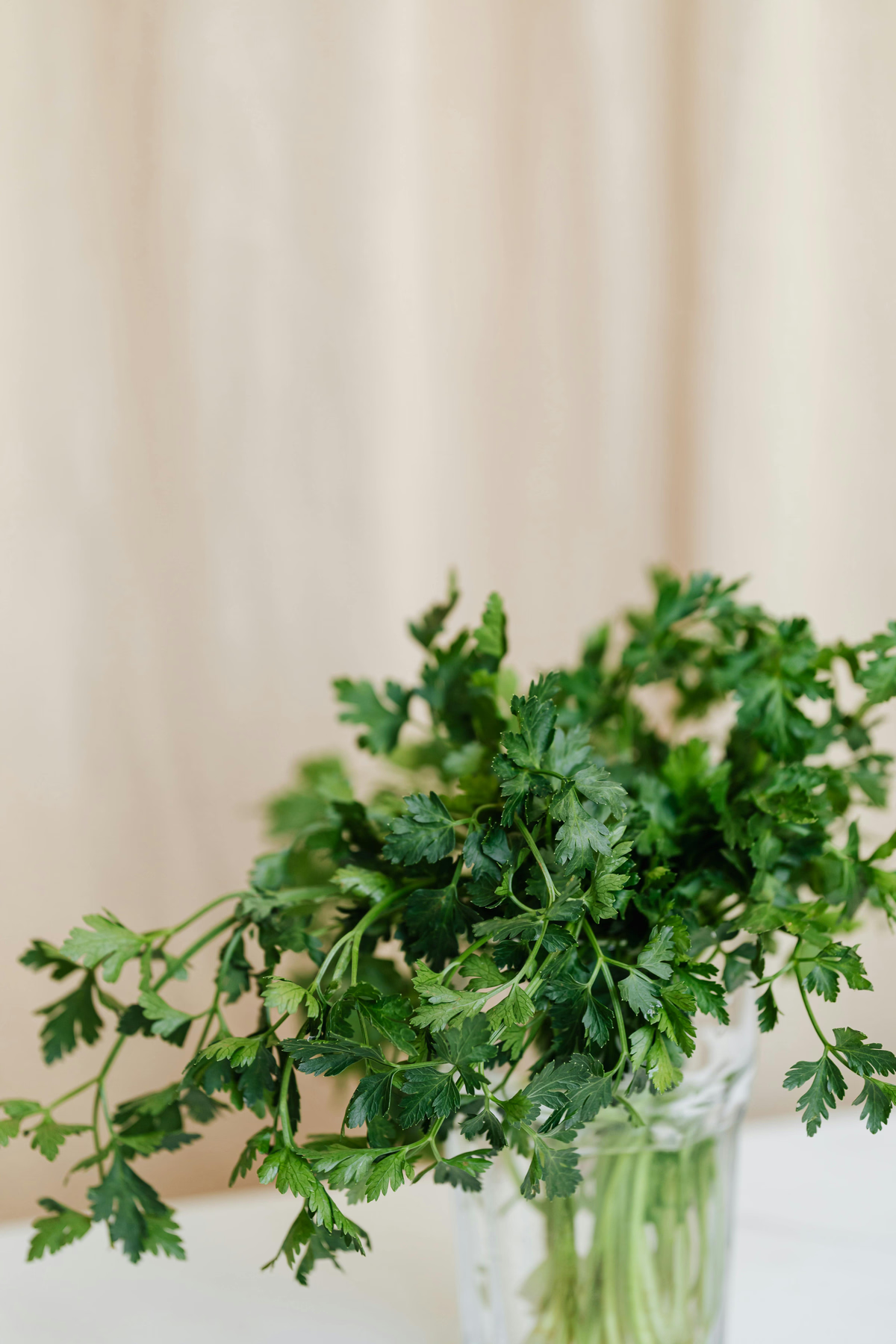
Parsley
Serving: 0.50 cup (30.4g, 11 cal)
Key Nutrients
| Nutrient | Amount | DV% | Rating |
|---|---|---|---|
| vitamin K | 498.56 mcg | 554% | Excellent |
| vitamin C | 40.43 mg | 54% | Excellent |
| vitamin A | 128.04 mcg RAE | 14% | Excellent |
| folate | 46.21 mcg | 12% | Excellent |
| iron | 1.88 mg | 10% | Excellent |
| copper | 0.05 mg | 6% | Very Good |
| calcium | 41.95 mg | 4% | Good |
| magnesium | 15.2 mg | 4% | Good |
| potassium | 168.42 mg | 4% | Good |
| fiber | 1 g | 4% | Good |
| zinc | 0.33 mg | 3% | Good |
| phosphorus | 17.63 mg | 3% | Good |
| vitamin B3 | 0.4 mg | 3% | Good |
| vitamin B1 | 0.03 mg | 3% | Good |
| manganese | 0.05 mg | 3% | Good |
vitamin K
Excellentvitamin C
Excellentvitamin A
Excellentfolate
Excellentiron
Excellentcopper
Very Goodcalcium
Goodmagnesium
Goodpotassium
Goodfiber
Goodzinc
Goodphosphorus
Goodvitamin B3
Goodvitamin B1
Goodmanganese
GoodAbout Parsley
Health benefits
A sprig of parsley can provide much more than a decoration on your plate. Parsley contains two types of unusual components that provide unique health benefits. The first type is volatile oil components, including myristicin, limonene, eugenol, and alpha-thujene. The second type is flavonoids, including apiin, apigenin, crisoeriol, and luteolin.
Volatile oil components and chemoprotection
Parsley’s volatile oils, particularly myristicin, have been shown to inhibit tumor formation in animal studies, and particularly, tumor formation in the lungs. Myristicin has also been shown to activate the enzyme glutathione-S-transferase, which helps attach the molecule glutathione to oxidized molecules that would otherwise do damage in the body. The activity of parsley’s volatile oils qualifies it as a “chemoprotective” food, and in particular, a food that can help neutralize particular types of carcinogens (like the benzopyrenes that are part of cigarette smoke and charcoal grill smoke).
A rich source of anti-oxidant nutrients
The flavonoids in parsley, especially luteolin, have been shown to function as antioxidants that combine with highly reactive oxygen-containing molecules (called oxygen radicals) and help prevent oxygen-based damage to cells. In addition, extracts from parsley have been used in animal studies to help increase the antioxidant capacity of the blood.
Beyond its volatile oils and flavonoids, a half-cup of parsley delivers 40.4 mg of vitamin C (54% DV) and 128 mcg RAE of vitamin A (14% DV), primarily as beta-carotene. Vitamin C is the body’s primary water-soluble antioxidant, neutralizing free radicals in aqueous cellular compartments. High free radical concentrations contribute to atherosclerosis, colon cancer, diabetes, and asthma progression. Vitamin C also acts as a cofactor in collagen synthesis and supports immune function through its effects on neutrophil activity and T-cell proliferation.
Beta-carotene, another important antioxidant, works in the fat-soluble areas of the body. Diets with beta-carotene-rich foods are also associated with a reduced risk for the development and progression of conditions like atherosclerosis, diabetes, and colon cancer. Like vitamin C, beta-carotene may also be helpful in reducing the severity of asthma, osteoarthritis, and rheumatoid arthritis. And beta-carotene is converted by the body to vitamin A, a nutrient so important to a strong immune system that its nickname is the “anti-infective vitamin.”
Parsley for a healthy heart
Parsley is a good source of folic acid, one of the most important B vitamins. While it plays numerous roles in the body, one of its most critical roles in relation to cardiovascular health is its necessary participation in the process through which the body converts homocysteine into benign molecules. Homocysteine is a potentially dangerous molecule that, at high levels, can directly damage blood vessels, and high levels of homocysteine are associated with a significantly increased risk of heart attack and stroke in people with atherosclerosis or diabetic heart disease. Enjoying foods rich in folic acid, like parsley, is an especially good idea for individuals who either have, or wish to prevent, these diseases. Folic acid is also a critical nutrient for proper cell division and is therefore vitally important for cancer-prevention in two areas of the body that contain rapidly dividing cells: the colon, and in women, the cervix.
Protection against rheumatoid arthritis
While one study suggests that high doses of supplemental vitamin C makes osteoarthritis, a type of degenerative arthritis that occurs with aging, worse in laboratory animals, another indicates that vitamin C-rich foods, such as parsley, provide humans with protection against inflammatory polyarthritis, a form of rheumatoid arthritis involving two or more joints.
The findings, presented in the Annals of the Rheumatic Diseases were drawn from a study of more than 20,000 subjects who kept diet diaries and were arthritis-free when the study began, and focused on subjects who developed inflammatory polyarthritis and similar subjects who remained arthritis-free during the follow-up period. Subjects who consumed the lowest amounts of vitamin C-rich foods were more than three times more likely to develop arthritis than those who consumed the highest amounts.
Parsley’s chlorophyll content also functions as a natural breath freshener.
Description
Parsley is commonly relegated to garnish duty, but gram for gram, it ranks among the most nutrient-dense culinary herbs. Its flavor is distinctly green and mildly peppery.
The two most popular types of parsley are curly parsley and Italian flat leaf parsley. The Italian variety has a more fragrant and less bitter taste than the curly variety. There is also another type of parsley known as turnip-rooted (or Hamburg) that is cultivated for its roots, which resemble salsify and burdock. Parsley belongs to the Umbelliferae family of plants, and its Latin name is Petroselinum crispum.
History
Parsley is native to the Mediterranean region of Southern Europe. While it has been cultivated for more than 2,000 years, parsley was used medicinally prior to being consumed as a food. The ancient Greeks held parsley to be sacred, using it to not only adorn victors of athletic contests, but also for decorating the tombs of the deceased. The practice of using parsley as a garnish actually has a long history that can be traced back to the civilization of the ancient Romans.
While it is uncertain when parsley began to be consumed as a seasoning, it seems to be sometime in the Middle Ages in Europe. Some historians credit Charlemagne with its popularization since he had it grown on his estates.
In some countries, the curly leaf variety is more popular. This may have its roots in the ancient preference for this type since people were oftentimes reticent to consume the flat leaf variety because it resembled fool’s parsley, a poisonous weed.
Turnip-rooted (or Hamburg) parsley, a relatively new species, having only been developed within the past two hundred years, has only recently begun gaining popularity.
How to select and store
Whenever possible, choose fresh parsley over the dried form of the herb since it is superior in flavor. Choose fresh parsley that is deep green in color and looks fresh and crisp. Avoid bunches that have leaves that are wilted or yellow as this indicates that they are either overmature or damaged. Just like with other dried herbs, if you choose to purchase dried parsley flakes, try to select organically grown parsley since this will give you more assurance that the herbs have not been irradiated.
Fresh parsley should be kept in the refrigerator in a plastic bag. If the parsley is slightly wilted, either sprinkle it lightly with some water or wash it without completely drying it before storing in the refrigerator.
If you have excess flat leaf parsley, you can easily dry it by laying it out in a single layer on a clean kitchen cloth. Once dried, it should be kept in a tightly sealed container in a cool, dark and dry place. Curly leaf parsley is best preserved by freezing, as opposed to drying. Although it will retain most of its flavor, it has a tendency to lose its crispness, so it is best used in recipes without first thawing.
Tips for preparing and cooking
Preparation
Fresh parsley should be washed right before using since it is highly fragile. The best way to clean it is just like you would spinach. Place it in a bowl of cold water and swish it around with your hands. This will allow any sand or dirt to dislodge. Remove the leaves from the water, empty the bowl, refill it with clean water and repeat this process until no dirt remains in the water.
Since it has a stronger flavor than the curly variety, Italian flat leaf parsley holds up better to cooking and therefore is usually the type preferred for hot dishes. It should be added towards the end of the cooking process so that it can best retain its taste, color and nutritional value.
If you are making a light colored sauce, use the stems from this variety as opposed to the leaves, so the sauce will take on the flavor of parsley but will not be imparted with its green color.
How to enjoy
Serving ideas
- Combine chopped parsley with bulgur wheat, chopped green onions (scallions), mint leaves, lemon juice and olive oil to make the Middle Eastern classic dish, tabouli.
- Add parsley to pesto sauce to add more texture to its green color.
- Combine chopped parsley, garlic and lemon zest, and use it as a rub for chicken, lamb and beef.
- Use parsley in soups and tomato sauces.
- Serve a colorful salad of fennel, orange, cherry tomatoes, pumpkin seeds and parsley leaves.
- Chopped parsley can be sprinkled on a host of different recipes, including salads, vegetable sautés and grilled fish.
For more recipe ideas, see Recipes.
Nutritional profile
A half-cup of parsley provides 554% DV of vitamin K, 54% DV of vitamin C, 14% DV of vitamin A, and 12% DV of folate, with 1.88 mg of iron (10% DV). Its volatile oil components include myristicin, limonene, eugenol, and alpha-thujene. The flavonoid profile includes apiin, apigenin, crisoeriol, and luteolin.
Individual concerns
Parsley and oxalates
Parsley is among a small number of foods that contain measurable amounts of oxalates, naturally-occurring substances found in plants, animals, and human beings. When oxalates become too concentrated in body fluids, they can crystallize and cause health problems. For this reason, individuals with already existing and untreated kidney or gallbladder problems may want to avoid eating parsley. Laboratory studies have shown that oxalates may also interfere with absorption of calcium from the body. Yet, in peer-reviewed research, the ability of oxalates to lower calcium absorption is relatively small and definitely does not outweigh the ability of oxalate-containing foods to contribute calcium to the meal plan. If your digestive tract is healthy, and you do a good job of chewing and relaxing while you enjoy your meals, you will get significant benefitséincluding absorption of calciuméfrom calcium-rich foods plant foods that also contain oxalic acid. Ordinarily, a healthcare practitioner would not discourage a person focused on ensuring that they are meeting their calcium requirements from eating these nutrient-rich foods because of their oxalate content. For more on this subject, please see “Can you tell me what oxalates are and in which foods they can be found?”
A santoku knife like the Zwilling Pro 7" Santoku Knife excels at fine mincing of herbs and aromatics — the hollow edge keeps things from sticking to the blade.
Recipes with Parsley
Full Nutrient Profile
Related Articles
References
- Ensminger AH, Ensminger, ME, Kondale JE, Robson JRK. Foods & Nutriton Encyclopedia. Pegus Press, Clovis, California. 1983.
- Ensminger AH, Esminger M. K. J. e. al. Food for Health: A Nutrition Encyclopedia. Clovis, California: Pegus Press; 1986. 1986. PMID:15210.
- Fortin, Francois, Editorial Director. The Visual Foods Encyclopedia. Macmillan, New York. 1996.
- Grieve M. A Modern Herbal. Dover Publications, New York. 1971.
- Hirano R, Sasamoto W, Matsumoto A et al. Antioxidant ability of various flavonoids against DPPH radicals and LDL oxidation. J Nutr Sci Vitaminol (Tokyo). 2001 Oct;47(5):357-62. 2001. https://doi.org/10.3177/jnsv.47.357
- Pattison DJ, Silman AJ, Goodson NJ, Lunt M, Bunn D, Luben R, Welch A, Bingham S, Khaw KT, Day N, Symmons DP. Vitamin C and the risk of developing inflammatory polyarthritis: prospective nested case-control study. Ann Rheum Dis. 2004 Jul;63(7):843-7. 2004. PMID:15194581. https://doi.org/10.1136/ard.2003.016097
- Sasaki N, Toda T, Kaneko T et al. Protective effects of flavonoids on the cytotoxicity of linoleic acid hydroperoxide toward rat pheochromocytoma PC12 cells. Chem Biol Interact. 2003 Mar 6;145(1):101-16. 2003. https://doi.org/10.1016/s0009-2797(02)00248-x
- Wood, Rebecca. The Whole Foods Encyclopedia. New York, NY: Prentice-Hall Press; 1988. 1988. PMID:15220. https://doi.org/10.1002/food.19770210206