Shrimp
Serving: 4.00 oz (113.4g, 135 cal)
Key Nutrients
| Nutrient | Amount | DV% | Rating |
|---|---|---|---|
| selenium | 56.13 mcg | 102% | Excellent |
| vitamin B12 | 1.88 mcg | 78% | Excellent |
| protein | 25.83 g | 52% | Very Good |
| phosphorus | 242.68 mg | 19% | Very Good |
| choline | 153.54 mg | 36% | Very Good |
| copper | 0.44 mg | 49% | Very Good |
| iodine | 46 mcg | 31% | Very Good |
| vitamin B3 | 3.04 mg | 19% | Good |
| zinc | 1.85 mg | 17% | Good |
| vitamin E | 2.49 mg (ATE) | 17% | Good |
| vitamin B6 | 0.27 mg | 16% | Good |
| omega-3 fats | 0.34 g | 14% | Good |
| pantothenic acid | 0.59 mg | 12% | Good |
| vitamin A | 102.06 mcg RAE | 11% | Good |
| tryptophan | 0.33 g | 103.1% | Excellent |
| iron | 0.59 mg | 3% | Good |
| magnesium | 38.56 mg | 9.6% | Good |
| omega 3 fatty acids | 0.37 g | 15.4% | Good |
selenium
Excellentvitamin B12
Excellentprotein
Very Goodphosphorus
Very Goodcholine
Very Goodcopper
Very Goodiodine
Very Goodvitamin B3
Goodzinc
Goodvitamin E
Goodvitamin B6
Goodomega-3 fats
Goodpantothenic acid
Goodvitamin A
Goodtryptophan
Excellentiron
Goodmagnesium
Goodomega 3 fatty acids
GoodAbout Shrimp
What’s new and beneficial about shrimp
- Shrimp can be a unique source of the antioxidant and anti-inflammatory carotenoid nutrient astaxanthin. It is possible for a single 4-ounce serving of shrimp to contain 1-4 milligrams of astaxanthin. In animal studies, astaxanthin has been shown to provide antioxidant support to both the nervous system and musculoskeletal system. In addition, some animal studies have shown decreased risk of colon cancer to be associated with astaxanthin intake, as well as decreased risk of certain diabetes-related problems. Importantly, the astaxanthin content of shrimp can vary widely, mostly in proportion to the amount of astaxanthin in their diet. In addition, the source of astaxanthin in the diet of shrimp remains an ongoing controversy. Since over half of the shrimp consumed both in the U.S. and worldwide are farmed, the diets that they consume depend on the approach of the producers. Both synthetic forms of astaxanthin and naturally occurring forms found in phytoplankton and zooplankton have been used in shrimp farming. In general, when purchasing farmed shrimp, selecting shrimp that have consumed natural amounts of astaxanthin from dietary sources like marine algae and zooplankton is preferable. You will find more recommendations regarding shrimp selection in our How to Select and Store and Individual Concerns sections below.
- At 56 micrograms in every 4 ounces, shrimp is an excellent source of the antioxidant mineral selenium. Recent research studies show that the selenium contained in shrimp can be well absorbed into the human body. In one study, one study estimated of about 80-85% for total selenium absorption from this shellfish. Since selenium deficiency has been shown to be a risk factor for heart failure and other forms of cardiovascular disease, as well as for other problems including type 2 diabetes, compromised cognitive function, and depression, shrimp may have a unique role to play in your meal plan if your health history places you at special risk in any of these areas.
- A second mineral benefit often overlooked in shrimp is its unusual concentration of copper. Not only does shrimp rank as a very good source of copper at WHF, but it is also our only fish to achieve this very good rating. Several recent studies show the copper richness of shrimp to be a standout among other fish. Researchers have pointed to a copper-containing protein in shrimp called hemocyanin as a likely reason for shrimp’s unique copper richness. (This copper-containing protein is involved is the shrimp’s oxygen metabolism.)
- Shrimp is often included on the “avoid” list for persons wanting to minimize their dietary intake of cholesterol. The 220 milligrams of cholesterol contained in a 4-ounce serving of shrimp makes this approach a legitimate concern. However, despite its high cholesterol content, several recent research studies have noted some desirable aspects of the fat profile in shrimp. One of these desirable aspects is shrimp’s omega-3 fat content. Four ounces of shrimp provides about 325 -375 milligrams of omega-3 fatty acids, including about 50% EPA (eicosapentaenoic acid) and 50% DHA (docosahexaenoic acid). EPA and DHA are especially important omega-3s for cardiovascular and nervous system health. In addition to this great mixture of omega-3s, shrimp also provides an unusual omega-3:omega-6 ratio of approximately 1:1. Since higher ratios of omega-3:omega-6 are associated with decreased risk of several chronic conditions (including obesity, high blood pressure, and type 2 diabetes), this aspect of shrimp’s fat content is notable, especially in meal plans with excessive amounts of omega-6s. Finally, it is interesting to note that according to recent studies, cholesterol is not the only sterol in shrimp. This type of fat is found in smaller amounts in the form of clionasterol and campesterol. While chemically similar to cholesterol, these other sterols function as anti-inflammatory molecules and they are associated with decreased levels of LDL-cholesterol, which would be considered a health benefit by many researchers. When looked at from this broader perspective, risks related to the high cholesterol content of shrimp might be overshadowed by its omega-3 and sterol composition—but we will need future studies to help us understand more about the big picture involving shrimp and fat. As always, if you have concerns that have you need to be cautious about cholesterol intake, discuss the inclusion of shrimp in your diet with your healthcare practitioner.
Shrimp, large, steamed
4.00 oz
(113.40 grams)
Calories: 135
GI: very low
NutrientDRI/DV
selenium102%
vitamin B1278%
protein52%
phosphorus50%
choline36%
copper32%
iodine31%
vitamin B319%
zinc17%
vitamin E17%
vitamin B616%
omega-3 fats14%
pantothenic acid12%
vitamin A11%
- Health Benefits
- Description
- History
- How to Select and Store
- Tips for Preparing and Cooking
- How to Enjoy
- Individual Concerns
- Nutritional Profile
- References
Health benefits
Anti-inflammatory and antioxidant support
We don’t usually think about seafood as a source of antioxidants, but shrimp features at least three unique antioxidants in its nutrient composition: the xanthophyll carotenoid called astaxanthin, and the minerals selenium and copper.
Astaxanthin
Astaxanthin is the primary color pigment in many shrimp, and it helps provide their tissue with its red and orange shades. While many reddish-orange foods get their color from other carotenoids (or from flavonoids), shrimp are especially concentrated in this one particular type of carotenoid. (Astaxanthin often accounts for at least two-thirds of all carotenoids in shrimp.) It is possible for a 4-ounce serving of shrimp to contain 1-4 milligrams of astaxanthin. In animal studies, astaxanthin has been shown to provide antioxidant support to both the nervous system and musculoskeletal system. In addition, some animal studies have shown decreased risk of colon cancer to be associated with astaxanthin intake, as well as decreased risk of certain diabetes-related problems. Under natural conditions, shrimp get astaxanthin through their diet, by consuming smaller organisms that contain this carotenoid, including algae and zooplankton. When farmed, the astaxanthin content of shrimp depends on the composition of their feed. Both synthetic forms of astaxanthin and naturally occurring forms of astaxanthin have been used in shrimp farming, and the use of synthetic astaxanthin remains a topic of ongoing controversy. In general, when purchasing farmed shrimp, selecting shrimp that have consumed natural amounts of astaxanthin from dietary sources like marine algae and zooplankton is preferable. You will find more recommendations regarding shrimp selection in our How to Select and Store and Individual Concerns sections below.
Selenium and copper
In the world of antioxidants, few enzymes are more important in our body than glutathione peroxidase (GPO). GPO helps protect most of our body systems from unwanted damage by oxygen-containing molecules. It is critical in body systems like the lungs, where exposure to these molecules is especially high. GPO is an enzyme that cannot function without the mineral selenium.
At 56 micrograms in every 4 ounces, shrimp is an excellent source of this antioxidant mineral. Shrimp is not only rich in selenium; research studies show that the selenium found in shrimp can be well-absorbed into the human body. In one study, one study estimated of about 80-85% for total selenium absorption from this shellfish. In addition to risk of problems involving lung function, selenium deficiency has been shown to increase our risk of heart failure and other forms of cardiovascular disease, as well as for other problems including type 2 diabetes, compromised cognitive function, and depression.
Copper is also classified as an antioxidant mineral, and one of its key roles in our health is related to the function of an enzyme called copper-zinc superoxide dismutase (SOD). SOD is found in the major fluid compartment of our cells (called the cytosol) and it is known to play a major role in regulation of oxygen metabolism and prevention of oxidative stress. Shrimp is our only fish at WHF to qualify as a “very good” source of copper in our rating system and it stands out in this respect as a source of antioxidant minerals. Not be overlooked, of course, is the fact that shrimp also qualifies as a good source of zinc—the second mineral required for effective SOD function.
Protein and peptide support
At nearly 26 grams per 4-ounce serving, shrimp ranks as a very good source of protein at WHF, and provides over half of the Daily Value (DV) in each serving. In fact, among all WHF, shrimp ranks as our 8th best source of protein. The protein richness of shrimp is one of the reasons this shellfish is relied on in so many different culinary traditions.
When the protein in fish (or any other food) is broken down during digestion, smaller protein fragments called peptides are formed. (Peptides are chains of amino acids. Proteins are too, but they are longer chains and more complicated in their structure.) Some relatively short peptides—consisting of only 10-25 amino acids—have been found to be present in partially digested shrimp proteins and appear able to stimulate release of the hormone cholecystokinin (CCK) from cells that line our intestinal tract. Release of CCK is important for many reasons, including the role of CCK in regulating appetite. Our feeling of satiety (lack of appetite) is partly related to the levels of CCK in our digestive tract. By helping trigger release of CCK, shrimp peptides may play a role in helping us feel full. In the long run, this feeling of satiety may also be an advantage in helping to decrease our risk of obesity. Research on shrimp peptides and satiety is in its early stage, and largely limited to animal studies at this point. But increasing interest is expected in this area of shrimp and health.
Other health benefits
At only 7 calories per shrimp, we can eat a relatively large amount of this shellfish without using up too many of our daily calories. For example, a person eating 1,800 calories per day could consume 20 shrimp and only be “spending” about 8% of his or her daily calories. This very low calorie cost would not be so remarkable if it were not for the fact that shrimp provides us with significant amounts of so many nutrients. Most foods with a far greater calorie content to get the nutrient richness provided by shrimp. For example, those same 20 shrimp that provide us with about 140 calories also provide us with 25 grams of protein or 50% of the Daily Value (DV).They also provide nearly 2 micrograms of vitamin B12—over 80% of the Dietary Reference Intake (DRI) level for adults. When this nutrient richness list for shrimp is continued across the list of other vitamins and minerals provided by this fish, it becomes striking how much nourishment can be provided by shrimp for less than 10% of a total day’s calories.
Description
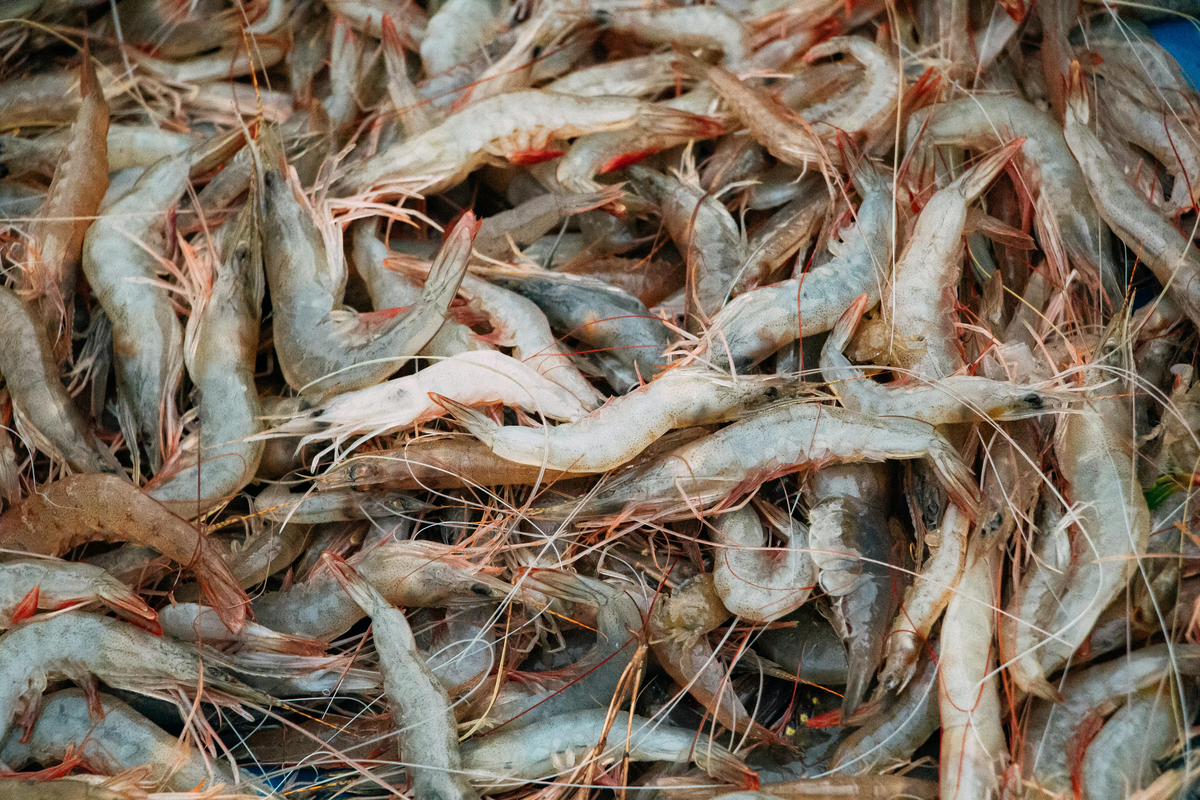
Shrimp are crustaceans (just like lobsters and crabs) and they belong to a category of living things called arthropods. Like all arthropods, shrimp have their skeleton on the outside instead of the inside ) and this outer skeleton (technically called an exoskeleton) is one of the features that gives shrimp their unusual look—almost like having a head shield that blocks out all of their features except their eyes, mouth opening, and antennae. In the U.S., consumers don’t typically eat the outer skeleton, heads, or tails of shrimp, even though these parts are often rich in nutrients and commonly consumed in most other countries. Shrimp account for about 30% of all seafood consumed in the U.S. Out of 14-15 pounds of total seafood per year consumed by the average U.S. adult each year, about 4-5 pounds come from shrimp. (Salmon and tuna have typically engaged in a tug-of-war for second place, and are typically consumed in average amounts of approximately 2-3 pounds per year. Shrimp are produced, sold, and consumed in a variety of different forms, including fresh, frozen, breaded, cooked, dried, and in paste form. In addition, you will find shrimp that are peeled, unpeeled, veined, deveined, and with head on or head off.
It would be difficult to find a WHFood with greater diversity than shrimp. While we are accustomed to thinking about foods like potatoes as involving a wide variety of colors and shapes (for example, large brown russets, medium sized golds, or small fingerlength reds), there are hundreds of commercially important shrimp species and literally thousands of total species worldwide. Yet, there is no relationship between the species of a shrimp and its color. You can find pink, red, white, brown, blue, and green shrimp, but within each of these color categories can be found a wide variety of shrimp species. No less diverse are the habitats of shrimp. These remarkable crustaceans can live in freshwater, saltwater, brackish water, or a combination of habitats. (Brackish water—also sometimes called briny water—is simply water that falls in between freshwater and saltwater. It is more salty than freshwater and less salty than saltwater.) In terms of saltwater habitats, the Pacific, Atlantic, and Indian Oceans serve as the top three saltwater habitats for shrimp. Added to this unusual diversity of habitats is the tendency of some researchers to group shrimp together based on the average water temperature of their environment. Warm-water shrimp come from tropical waters in southern parts of the world, and cold-water shrimp come from colder northern waters.
The terms “shrimp” and “prawns” can be confusing. Even scientists often use these words inconsistently. In the popular press and in many restaurants, larger shrimp—often from freshwater habitats—are referred to as “prawns,” while smaller shrimp—often from saltwater habitats—are called “shrimp.” In terms of size, “large” typically means that you get about 40 or less per cooked pound (in comparison to about 50 for “medium” and 60 for “small”). But from a science perspective, both shrimp and prawns can come from saltwater or freshwater, and there is no absolute standard for measuring small, medium, or large. In this article and throughout our website, we’ll be using the word “shrimp” as a general term that includes all species—even those which might be referred to as “prawns” in some research studies or in some restaurants.
Many people ask about the way shrimp sizes (small, medium, large, jumbo) are determined. While there is no precise method typically used for shrimp sizing, count per pound is the most common method used. (Count per pound refers to the number of shrimp that you get when you purchase or consume one pound.) With small cooked shrimp, that number is usually around 60. With medium cooked shrimp, it falls to about 50 (since the shrimp are bigger, and each one weighs more). For large shrimp, the count per pound is about 40. For jumbo shrimp the count per pound is about 30.
We have created the chart below to give you a better idea about the amazing diversity of shrimp. As you will see in the chart, there are numerous shrimp families, and within any given family, you will find examples of shrimp that are being referred to by a particular color, or by the name “prawn” versus “shrimp.” However, these common names do not necessarily provide you with helpful information about the nutrient content of the shrimp, since that nutrient content typically depends more on the species of shrimp and its lifelong habitat (including of course, its diet).
Classification of various shrimp as crustaceans (decapoda order)
Suborder
Family
Genus
Species
Dendrobranchiata
Penaeidiae
Farfantepenaeus
aztecus (brown shrimp)
brasiliensis (pinkspotted shrimp)
brevirostris (crystal shrimp, pink shrimp)
californiensis (yellowleg shrimp)
duorarum (pink shrimp)
paulensis (pink shrimp)
subtilis (southern brown shrimp)
Fenerropenaeus
chinensis (fleshy prawn)
indicus (Indian white shrimp)
merquiensis (banana prawn)
penicillatus (redtail prawn)
Litopenaeus
schmitti (white shrimp)
setiferus (white shrimp)
stylirostris (blue shrimp)
vannamei (Pacific white shrimp)
Penaeus
esculentus (brown tiger prawn)
monodon (black tiger shrimp)
semisulcatus (green tiger prawn)
Sicyoniidae (rock shrimps)
Sicyonia
burkenroadi (spiny rock shrimp)
brevirostris (coral shrimp)
dorsalis (lesser rock shrimp)
ingentis (ridgeback rock shrimp)
lancifer (knight rock shrimp)
Solenoceridae (solenocerid shrimps)
Pleoticus
mulleri (Argentine red shrimp)
robustus (royal red shrimp)
Solenocera (humpback shrimps)
agassizzi (kolibri shrimp)
crassicornis (coastal mud shrimp)
koelbeli (Chinese mud shrimp)
vioscai (humpback shrimp)
Pleocyemata
Crangonidae
Crangon
alaskensis (Alaskan bay shrimp)
crangon (brown shrimp)
franciscorum (California bay shrimp)
septemspinosa (sand shrimp)
Pontophilus
norvegicus (Norwegian shrimp)
Palaemonidae (palaemonid shrimps)
Macrobrachium
malcomsonii (monsoon river prawn)
nipponense (oriental river prawn)
rosenbergii (giant freshwater prawn)
Palaemon
varians (Atlantic ditch shrimp)
Pandalideae (pandalid shrimps)*
Dichelopandalus
bonnieri (whip shrimp)
leptocerus (bristled longbeak)
Pandalus
borealis (northern shrimp)
eous (northern pink shrimp)
hypsinotus (coonstripe shrimp)
Hippolytidae
Ealus
abricii (Arctic eualid)
Lebbeus
polaris (polar shrimp)
groenlandicus (spiny lebbeid)
Spirontocaris
lamellicornis (Dana’s blade shrimp)
liljeborgii (friendly blade shrimp)
spinus (parrot shrimp)
* The name “caridean shrimp” is also sometimes used to refer to panadalid shrimp from the Pandalideae family (and from three other shrimp families as well). It is based on a scientific classification rank called an “infraorder.”
Unfortunately, there is no way to take this amazing diversity of shrimp species and narrow it down to some simple set of shrimp recommendations that is based primarily on species or habitat. Some natural habitats remain fairly healthy and well suited for shrimp harvesting, and other do not. Similarly, it is important to remember that about 55% of shrimp consumed in the U.S. and worldwide are presently farmed, and the quality of shrimp farming conditions can also vary widely. Some farmed shrimp are raised in fully recirculating, fully open, or other types of systems that are carefully monitored and that come closer to approximately natural conditions than other types of shrimp farms. In addition, the diet fed to farmed shrimp can vary widely, and in some cases incorporates natural feedstocks involving both algae and zooplankton.
As a result of these many different factors, some shrimp raised under farmed conditions may provide a favorable option to non-farmed shrimp that have lived in contaminated and/or overfished habitats. While we recognize the ongoing nature of environmental debates over farmed fish (aquaculture) versus caught fish (catch fishery), we believe that in today’s marketplace—and based on research studies about the nutrient content of shrimp—your best bet when selecting shrimp is to follow the recommendations of an organization that continually monitors shrimp quality in the U.S. marketplace and makes recommendations based on a combination of actual marketplace and environmental factors rather than any single, pre-established criterion (for example, farmed versus caught, freshwater versus saltwater, Atlantic Ocean versus Pacific Ocean, large versus small, etc.). In our Individual Concerns section, we provide you with website links to some of seafood monitoring organizations that rank at the top of our recommendation list for making shrimp choices.
History
It’s virtually impossible to find a continent or major world location in which shrimp has not been traditionally enjoyed as a part of local cuisine. Whether you look to North America, Central America, South America, Europe, the Mediterranean, Africa, the Middle East, Asia, Australia, or the Arctic, you will find traditions in which shrimp have been enjoyed as a regular part of the meal plan. That’s why you will find 2014 imports of shrimp into the U.S. from about two dozen different countries, including India, Bangladesh, Thailand, Indonesia, Vietnam, Malaysia, China, Ecuador, Peru, Venezuela, Argentina, Honduras, Panama, Nicaragua, Canada, Mexico, and the Philippines. Similarly, you will find capture fisheries and aquaculture being practiced in most of these countries, as well as others.
About 55% of global commercial shrimp is currently farmed. Litopenaeus vannemei (Pacific white shrimp) is the most widely farmed single species. Other widely farmed species include Macrobrachium rosenbergii (giant freshwater prawn) and Penaeus monodon (black tiger shrimp). Crangon crangon (brown shrimp) are among the most widely caught shrimp species. Many observers expect shrimp farming to increase over the next decade, with a heightened focus on aquafeed management, broodstock, larviculture, and growout. It remains to be seen whether overall shrimp farming practices will be able to develop in ways that can further recognize and accommodate some of the barriers inherent with aquaculture, and whether the overall quality of farmed shrimp will compare favorably or unfavorably to overall quality of wild shrimp. As stated in the previous section, however, purchasing shrimp based on any single criterion alone is not sufficient, regardless of whether that criterion is farmed versus caught, freshwater versus saltwater, etc. Instead, the best approach is to follow the recommendations of an organization that continually monitors shrimp quality and makes its recommendations based on a combination of many different factors. In our Individual Concerns section below, we provide practical recommendations in this regard.
How to select and store
Just as with any seafood, it is best to purchase shrimp from a store that has a good reputation for having a fresh supply. Get to know a fishmonger (person who sells the seafood) at the store so that you can have a trusted resource from whom you can purchase your seafood.
When you will be preparing the shrimp should influence your decision as to whether you should buy fresh or frozen shrimp. Frozen shrimp offer the longest shelf life, as they are able to be kept for several weeks, whereas fresh shrimp will only keep for a day or two. We think about fresh shrimp as a very perishable food, ideally eaten on the same day as they are purchased.
Fresh shrimp should have firm bodies that are still attached to their shells. They should be free of black spots on their shell since this indicates that the flesh has begun to break down. In addition, the shells should not appear yellow or gritty as this may be indicative that sodium bisulfate or another chemical has been used to bleach the shells.
Smell is a good indicator of freshness; good quality shrimp have a slightly saltwater smell. Since a slightly “off” smell cannot be detected through plastic, if you have the option, purchase displayed shrimp as opposed to those that are prepackaged. Once the fishmonger wraps and hands you the shrimp that you have selected, smell them through the paper wrapping and return them if they do not smell right. When fresh shrimp have been left out for too long, some people describe them as having an “ammonia” smell.
Color can also be an indicator of poor fresh shrimp quality. Unless you are purchasing spotted or striped shrimp, you should not see dark spots or rings of any kind. These markings are usually a sign of deterioration.
When storing any type of seafood, including shrimp, it is important to keep it cold since seafood is very sensitive to temperature. Therefore, after purchasing shrimp or other seafood, make sure to return it to a refrigerator as soon as possible. If the shrimp is going to accompany you during a day full of errands, keep a cooler in the car where you can place the shrimp to make sure it stays cold and does not spoil.
The temperature of most refrigerators is slightly warmer than ideal for storing seafood. Therefore, to ensure maximum freshness and quality, it is important to use special storage methods so as to create the optimal temperature for holding the shrimp.
One of the easiest ways to do this is to place the shrimp in a zip-lock bag in a baking dish layered with ice or icepacks. Place ice or icepacks over the shrimp as well. The baking dish and shrimp should then be placed on the bottom shelf of the refrigerator, which is its coolest area. Replenish ice one or two times per day. Shrimp can be refrigerated for up to two days although it should be purchased as close to being served as possible.
You can extend the shelf life of shrimp by freezing it. To do so, wrap it well in plastic and place it in the coldest part of the freezer where it will keep for about one month.
To defrost shrimp place it in a bowl of cold water or in the refrigerator. Do not thaw the shrimp at room temperature or in a microwave since this can lead to a loss of moisture and nutrients, and can increase risk of contamination.
Tips for preparing and cooking
Preparation
Shrimp can be cooked either shelled or unshelled depending how you will be using them in a recipe. There are various methods to removing the shell. One way is to first pinch off the head and the legs and then, holding the tail, peel the shell off from the body. If shelling frozen shrimp, do not defrost them completely as they will be easier to shell when they are still slightly frozen.
A much-debated question about shrimp involves the need for de-veining. The dark “vein” that runs lengthwise down the back of the shrimp is not actually a vein at all, but rather the shrimp’s digestive tract. Like the other parts of a shrimp, it is both edible and contains nutrients. However, many people dislike the texture of this shrimp part, and they also dislike the idea of eating what amounts to the shrimp’s intestine. We’ve searched for research on the nutrient contents of the shrimp’s “vein,” as well as the potential contaminant contents, but we have not found helpful information in this regard. Luckily, the vein of the shrimp is easy to see, and if you want to remove it, you can do so fairly easily with a shrimp deveiner. These devices are inexpensive and available at most kitchen supply stores; they make the job of shrimp deveining fairly easy. An alternative method is to very carefully slice down the back of the shrimp with a knife and hold the shrimp under cold running water to allow the force of the water to rinse out the vein contents.
How to enjoy
Serving ideas
- Combine chopped shrimp with chopped scallions, tomatoes, diced chili peppers, garlic, lemon juice, and a little olive oil. Season to taste and serve this fragrant shrimp salad on a bed of romaine lettuce.
- Serve cold cooked shrimp with salsa dip.
- Cut up cooked shrimp and add it to vegetable soups.
- Make a quick, easy and healthy version of pasta putanesca. Add cooked shrimp to spicy pasta sauce and serve over whole wheat noodles.
Individual concerns
General environmental concerns
Contamination of ocean waters, overfishing of fish and shellfish species, quality of fish farming practices, potential detrimental effects of certain fishing methods on wildlife, and risk of exposure to fish contaminants (especially mercury) have become individual concerns for many consumers. (These concerns are not limited to shrimp, but extend to all seafood.) Luckily, two organizations in the U.S. have worked to evaluate all the issues listed above, and offer practical recommendations for making fish choices in light of these concerns. We encourage you to make use of the resources provided by both of these organizations. The first organization is the Monterey Bay Seafood Watch (www.seafoodwatch.org)
You can find practical recommendation for 65 different types of fish thanks to the work of Monterey Bay, as well as Best Choices, Good Alternatives, and Choices to Avoid. You can also download seafood guides specific to your region of the United States and a mobile app providing you with this information. The Monterey Bay Seafood Watch program is associated with the Monterey Bay Aquarium in Monterey Bay, California and run by the not-for-profit Monterey Bay Aquarium Foundation.
The second organization is the National Ocean and Atmospheric Administration Fish Watch (http://www.fishwatch.gov/). The National Ocean and Atmospheric Administration (NOAA) is a federal agency in Washington, D.C. that has used its FishWatch website to create educational, user-friendly profiles of over 100 fish and shellfish, with up-to-date information about fishing rate, habitat impacts, population, bycatch, species science, nutrient content, and marketplace availability. In comparison with the Monterey Bay Seafood Watch, the FishWatch site is more educational in nature, and is focuses on the providing of information that can be used to make informed seafood choices.
Shrimp and food allergies
Crustacean shellfish, such as shrimp, are among the eight food types considered to be major food allergens in the U.S., requiring identification on food labels. For helpful information about this topic, please see our article, An Overview of Adverse Food Reactions.
Shrimp and sulfites
An Overview of Adverse Food Reactions
Nutritional profile
Four oz (113.4g) at 135 calories provides tryptophan (103.1% DV), selenium (102% DV), vitamin B12 (78% DV), protein (52% DV), phosphorus (50% DV), choline (36% DV), copper (32% DV), iodine (31% DV), iron (19.4% DV), vitamin B3 (19% DV), zinc (17% DV), vitamin E (17% DV), vitamin B6 (16% DV), omega 3 fatty acids (15.4% DV), omega-3 fats (14% DV), pantothenic acid (12% DV), vitamin A (11% DV). Smaller but measurable amounts of magnesium (9.6% DV) round out the profile. Shrimp is a unique source of the carotenoid astaxanthin.
An important message about shrimp
Shrimp appears on the “10 Most Controversial WHF List.” This list was created to let you know that even though some foods (like shrimp) can make an outstanding contribution to your meal plan, they are definitely not for everyone. Shrimp can be difficult to find in high-quality form; can be more commonly associated with adverse reactions than other foods; and can present more challenges to our food supply in terms of sustainability. More details about our 10 Most Controversial WHF can be found here.
Cast iron is ideal for getting a good sear on fish and meat. The Lodge Chef Collection 12" Cast Iron Skillet is a professional-weight pan that improves with every use.
Recipes with Shrimp
Full Nutrient Profile
Related Articles
- Are there any environmental concerns when it comes to shrimp being raised in non-natural habitats?
- Can salads be a good source of nutrients?
- Can you tell me more about adverse reactions to cow's milk?
- Is it bad to eat regular canned tuna in water for lunch everyday?
- Is it true that pregnant women should avoid fish because of their mercury content? Is tuna a particular problem?
- Should I be concerned about mercury in fish and what fish are safe to eat?
- What are the best fish to buy?
- What Do You Think About a Mostly Vegetarian-Plus-Seafood Meal Plan?
References
- Ayuso R, Sanchez-Garcia S, Lin J et al. Greater epitope recognition of shrimp allergens by children than by adults suggests that shrimp sensitization decreases with age. Journal of Allergy and Clinical Immunology, Volume 125, Issue 6, June 2010, Pages 1286-1293. https://doi.org/10.1016/j.jaci.2010.03.010
- Bono G, Gai F, Peiretti PG et al. Chemical and nutritional characterisation of the Central Mediterranean Giant red shrimp (Aristaeomorpha foliacea): Influence of trophic and geographical factors on flesh quality. Food Chemistry, Volume 130, Issue 1, 1 January 2012, Pages 104-110. Bugel SH, Sandstrom B and Larsen EH. Absorption and retention of selenium from shrimps in man. Journal of Trace Elements in Medicine and Biology, Volume 14, Issue 4, April 2001, Pages 198-204. https://doi.org/10.1016/j.foodchem.2011.07.004
- Cudennec B, Ravallec-Ple R, Courois E et al. Peptides from fish and crustacean by-products hydrolysates stimulate cholecystokinin release in STC-1 cells. Food Chemistry, Volume 111, Issue 4, 15 December 2008, Pages 970-975. https://doi.org/10.1016/j.foodchem.2008.05.016
- Fillos D, Scott LL, De Sylor MA et al. PCB concentrations in shrimp from major import markets and the United States. Environ Toxicol Chem. 2012, May; 31(5):1063-71. https://doi.org/10.1002/etc.1803
- Larsen R, Eilertsen KE, and Elvevoll EO. Health benefits of marine foods and ingredients. Biotechnology Advances, Volume 29, Issue 5, September-October 2011, Pages 508-518. https://doi.org/10.1016/j.biotechadv.2011.05.017
- Mahaffey KR, Clickner RP and Jeffries RA. Methylmercury and omega-3 fatty acids: Co-occurrence of dietary sources with emphasis on fish and shellfish. Environmental Research, Volume 107, Issue 1, May 2008, Pages 20-29. https://doi.org/10.1016/j.envres.2007.09.011
- Mezzomo N, Tenfen L, Farias MS, et al. Evidence of anti-obesity and mixed hypolipidemic effects of extracts from pink shrimp (Penaeus brasiliensis and Penaeus paulensis) processing residue. The Journal of Supercritical Fluids, Volume 96, January 2015, Pages 252-261. https://doi.org/10.1016/j.supflu.2014.09.021
- Olmedo P, Hernandez AF, Pla A, et al. Determination of essential elements (copper, manganese, selenium and zinc) in fish and shellfish samples. Risk and nutritional assessment and mercury—selenium balance. Food and Chemical Toxicology, Volume 62, December 2013, Pages 299-307. https://doi.org/10.1016/j.fct.2013.08.076
- Otton R, Marin DP, Bolin AP et al. Astaxanthin ameliorates the redox imbalance in lymphocytes of experimental diabetic rats. Chemico-Biological Interactions, Volume 186, Issue 3, 5 August 2010, Pages 306-315. https://doi.org/10.1016/j.cbi.2010.05.011
- Sila A, Ghlissi Z, Kamoun Z, et al. Astaxanthin from shrimp by-products ameliorates nephropathy in diabetic rats. Eur J Nutr. 2014 May 13. [Epub ahead of print]. https://doi.org/10.1007/s00394-014-0711-2
- Smith KL and Guentzel JL. Mercury concentrations and omega-3 fatty acids in fish and shrimp: Preferential consumption for maximum health benefits. Marine Pollution Bulletin, Volume 60, Issue 9, September 2010, Pages 1615-1618. https://doi.org/10.1016/j.marpolbul.2010.06.045
- Stentiford GD, Neil DM, Peeler EJ at el. Disease will limit future food supply from the global crustacean fishery and aquaculture sectors. Journal of Invertebrate Pathology, Volume 110, Issue 2, June 2012, Pages 141-157.
- Tsape K, Sinanoglou VJ and Miniadis-Meimaroglou S. Comparative analysis of the fatty acid and sterol profiles of widely consumed Mediterranean crustacean species. Food Chemistry, Volume 122, Issue 1, 1 September 2010, Pages 292-299. https://doi.org/10.1016/j.foodchem.2010.02.019
- Wilson-Sanchez G, Moreno-Felix C, Velazquez C, et al. Antimutagenicity and Antiproliferative Studies of Lipidic Extracts from White Shrimp (Litopenaeus vannamei). https://doi.org/10.3390/md8112795
- Marione Drugs. 2010; 8(11): 2795—2809.
- Yanar Y, Celik M and Yanar M. Seasonal changes in total carotenoid contents of wild marine shrimps (Penaeus semisulcatus and Metapenaeus monoceros) inhabiting the eastern Mediterranean. Food Chemistry, Volume 88, Issue 2, November 2004, Pages 267-269. https://doi.org/10.1016/j.foodchem.2004.01.037
- Yang AC, Arruda LK, Santos ABR et al. Measurement of IgE antibodies to shrimp tropomyosin is superior to skin prick testing with commercial extract and measurement of IgE to shrimp for predicting clinically relevant allergic reactions after shrimp ingestion. Journal of Allergy and Clinical Immunology, Volume 125, Issue 4, April 2010, Pages 872-878. https://doi.org/10.1016/j.jaci.2009.11.043
- Yasui Y, Hosokawa M, Mikami N et al. Dietary astaxanthin inhibits colitis and colitis-associated colon carcinogenesis in mice via modulation of the inflammatory cytokines. Chemico-Biological Interactions, Volume 193, Issue 1, 15 August 2011, Pages 79-87. https://doi.org/10.1016/j.cbi.2011.05.006
- Bono G, Gai F, Peiretti PG et al. Chemical and nutritional characterisation of the Central Mediterranean Giant red shrimp (Aristaeomorpha foliacea): Influence of trophic and geographical factors on flesh quality. Food Chemistry, Volume 130, Issue 1, 1 January 2012, Pages 104-110. https://doi.org/10.1016/j.foodchem.2011.07.004
- Bugel SH, Sandstrom B and Larsen EH. Absorption and retention of selenium from shrimps in man. Journal of Trace Elements in Medicine and Biology, Volume 14, Issue 4, April 2001, Pages 198-204. https://doi.org/10.1016/s0946-672x(01)80002-x
- Impens S, Reybroeck W, Vercammen J et al. Screening and confirmation of chloramphenicol in shrimp tissue using ELISA in combination with GC-MS2 and LC-MS2. Analytica Chimica Acta, Volume 483, Issues 1-2, 25 April 2003, Pages 153-163. https://doi.org/10.1016/s0003-2670(02)01232-1
- Sharif R, Ghazali AR, Rajab NF et al. Toxicological evaluation of some Malaysian locally processed raw food products. Food Chem Toxicol. 2008, Jan; 46(1):368-74. https://doi.org/10.1016/j.fct.2007.08.010
- Impens S, Reybroeck W, Vercammen J et al. Screening and confirmation of chloramphenicol in shrimp tissue using ELISA in combination with GC–MS2 and LC–MS2. Analytica Chimica Acta, Volume 483, Issues 1–2, 25 April 2003, Pages 153-163. https://doi.org/10.1016/s0003-2670(02)01232-1
- Larsen R, Eilertsen KE, and Elvevoll EO. Health benefits of marine foods and ingredients. Biotechnology Advances, Volume 29, Issue 5, September–October 2011, Pages 508-518. https://doi.org/10.1016/j.biotechadv.2011.05.017
- Beydoun MA, Kaufman JS, Satia JA, Rosamond W, Folsom AR. Plasma n-3 fatty acids and the risk of cognitive decline in older adults: the Atherosclerosis Risk in Communities Study. Am J Clin Nutr. 2007 Apr;85(4):1103-11. 2007. PMID:17413112. https://doi.org/10.1093/ajcn/85.4.1103
- Chrysohoou C, Panagiotakos DB, Pitsavos C, Skoumas J, Krinos X, Chloptsios Y, Nikolaou V, Stefanadis C. Long-term fish consumption is associated with protection against arrhythmia in healthy persons in a Mediterranean region--the ATTICA study. Am J Clin Nutr. 2007 May;85(5):1385-91. 2007. PMID:17490977. https://doi.org/10.1093/ajcn/85.5.1385
- Connor WE, Connor SL. The importance of fish and docosahexaenoic acid in Alzheimer disease. Am J Clin Nutr. 2007 Apr;85(4):929-30. 2007. PMID:17413088. https://doi.org/10.1093/ajcn/85.4.929
- De Oliveira e Silva ER, Seidman CE, Tian JJ, et al. Effects of shrimp consumption on plasma lipoproteins. Am J Clin Nutr 1996 Nov;64(5):712-7 1996. https://doi.org/10.1093/ajcn/64.5.712
- Ensminger AH, Esminger M. K. J. e. al. Food for Health: A Nutrition Encyclopedia. Clovis, California: Pegus Press; 1986 1986. PMID:15210.
- Fritschi L, Ambrosini GL, Kliewer EV, Johnson KC; Canadian Cancer Registries Epidemiologic Research Group. Dietary fish intake and risk of leukaemia, multiple myeloma, and non-Hodgkin lymphoma. Cancer Epidemiol Biomarkers Prev. 2004 Apr;13(4):532-7. 2004. PMID:15066916. https://doi.org/10.1158/1055-9965.532.13.4
- Green KN, Martinez-Coria H, Khashwji H, Hall EB, Yurko-Mauro KA, Ellis L, Laferla FM. Dietary Docosahexaenoic Acid and Docosapentaenoic Acid Ameliorate Amyloid-{beta} and Tau Pathology via a Mechanism Involving Presenilin 1 Levels. J Neurosci. 2007 Apr 18;27(16):4385-95. 2007. PMID:17442823. https://doi.org/10.1523/JNEUROSCI.0055-07.2007
- Kiecolt-Glaser JK, Belury MA, Porter K, Beversdorf DQ, Lemeshow S, Glaser R. Depressive Symptoms, omega-6:omega-3 Fatty Acids, and Inflammation in Older Adults. Psychosom Med. 2007 Mar 30; [Epub ahead of print] 2007. PMID:17401057. https://doi.org/10.1097/PSY.0b013e3180313a45
- Liu, G-M, Cheng H, Nesbit J, et al. Effects of Boiling on the IgE-Binding Properties of Tropomyosin of Shrimp(Litopenaeus vannamei). Journal of Food Science. 2010. Volume 75 Issue 1, Pages T1-T5. 2010. https://doi.org/10.1111/j.1750-3841.2009.01391.x
- Lukiw WJ, Cui JG, Marcheselli VL, Bodker M, Botkjaer A, Gotlinger K, Serhan CN, Bazan NG. A role for docosahexaenoic acid-derived neuroprotectin D1 in neural cell survival and Alzheimer disease. J Clin Invest. 2005 Oct;115(10):2774-83. 2005. PMID:16151530. https://doi.org/10.1172/JCI25420
- Ma QL, Teter B, Ubeda OJ, et al. Omega-3 fatty acid docosahexaenoic acid increases SorLA/LR11, a sorting protein with reduced expression in sporadic Alzheimer's disease (AD): relevance to AD prevention. J Neurosci. 2007 Dec 26;27(52):14299-307. 2007. PMID:18160637. https://doi.org/10.1523/JNEUROSCI.3593-07.2007
- Margen S and the Editor, Univ of California at Berkley Wellness Letter. The Wellness Encyclopedia of food and nutrition. New York: Health Letter Associates 1992 1992.
- Mazza M, Pomponi M, Janiri L, Bria P, Mazza S. Omega-3 fatty acids and antioxidants in neurological and psychiatric diseases: an overview. Prog Neuropsychopharmacol Biol Psychiatry. 2007 Jan 30;31(1):12-26. Epub 2006 Aug 28. 2007. PMID:16938373. https://doi.org/10.1016/j.pnpbp.2006.07.010
- Schaefer EJ, Bongard V, Beiser AS, Lamon-Fava S, Robins SJ, Au R, Tucker KL, Kyle DJ, Wilson PW, Wolf PA. Plasma phosphatidylcholine docosahexaenoic acid content and risk of dementia and Alzheimer disease: the Framingham Heart Study. Arch Neurol. 2006 Nov;63(11):1545-50. 2006. PMID:17101822. https://doi.org/10.1001/archneur.63.11.1545
- Theodoratou E, McNeill G, Cetnarskyj R, Farrington SM, Tenesa A, Barnetson R, Porteous M, Dunlop M, Campbell H. Dietary Fatty acids and colorectal cancer: a case-control study. Am J Epidemiol. 2007 Jul 15;166(2):181-95. Epub 2007 May 9. 2007. PMID:17493949. https://doi.org/10.1093/aje/kwm063
- Ueshima H, Stamler J, Elliott P, Chan Q, Brown IJ, Carnethon MR, Daviglus ML, He K, Moag-Stahlberg A, Rodriguez BL, Steffen LM, Van Horn L, Yarnell J, Zhou B. Food Omega-3 Fatty Acid Intake of Individuals (Total, Linolenic Acid, Long-Chain) and Their Blood Pressure. INTERMAP Study. Hypertension. 2007 Jun 4; [Epub ahead of print] 2007. PMID:17548718. https://doi.org/10.1161/HYPERTENSIONAHA.107.090720
- van Gelder BM, Tijhuis M, Kalmijn S, Kromhout D. Fish consumption, n-3 fatty acids, and subsequent 5-y cognitive decline in elderly men: the Zutphen Elderly Study. Am J Clin Nutr. 2007 Apr;85(4):1142-7. 2007. PMID:17413117. https://doi.org/10.1093/ajcn/85.4.1142
- Vogt, T. M. Ziegler, R. G. Graubard, B. I et al. Serum selenium and risk of prostate cancer in U.S. blacks and whites. Int J Cancer. 2003 Feb 20; 103(5):664-70 2003.
- Wood, Rebecca. The Whole Foods Encyclopedia. New York, NY: Prentice-Hall Press; 1988 1988. PMID:15220. https://doi.org/10.1002/food.19770210206